The Solar Maximum Window: Why 2026 and 2027 Are Unusually Good Aurora Years
Solar Cycle 25 peaked in October 2024 and activity remains elevated through 2026. What that actually means for your odds, and what it does not change.
 By Aino Korhonen, Lapland tour specialist and Arctic experience guide
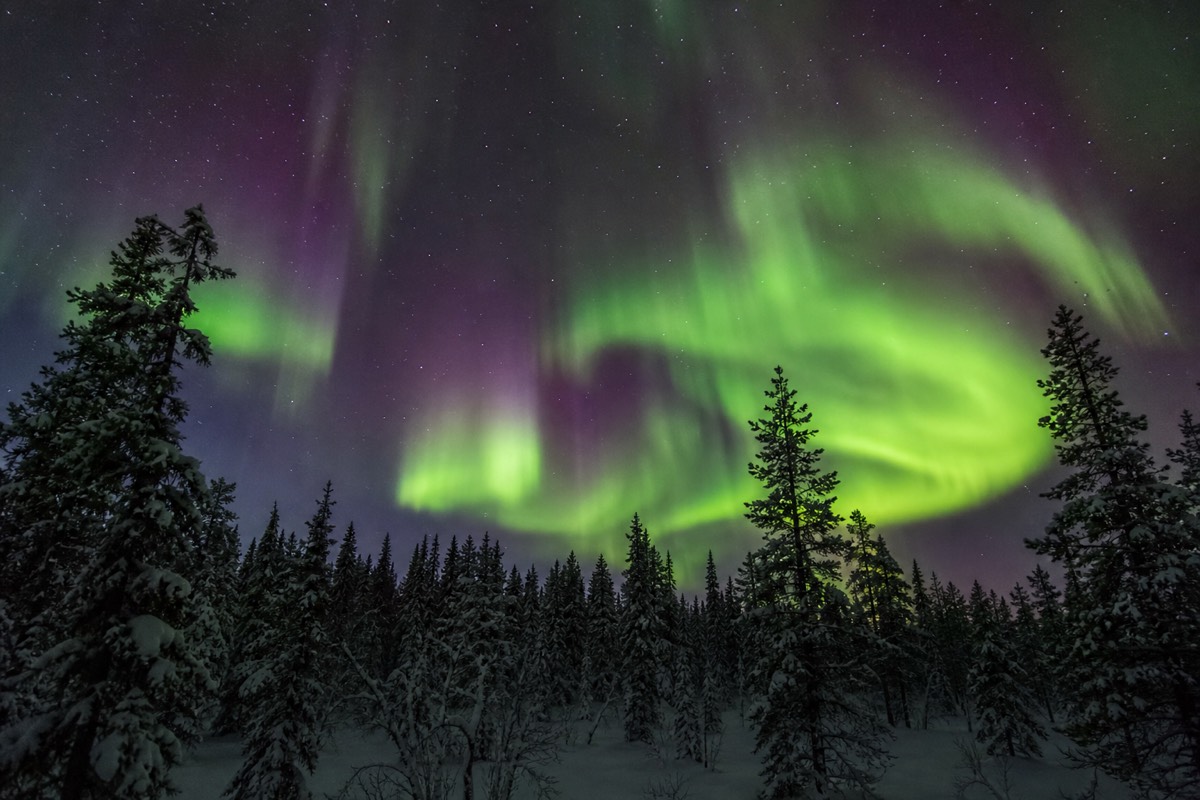
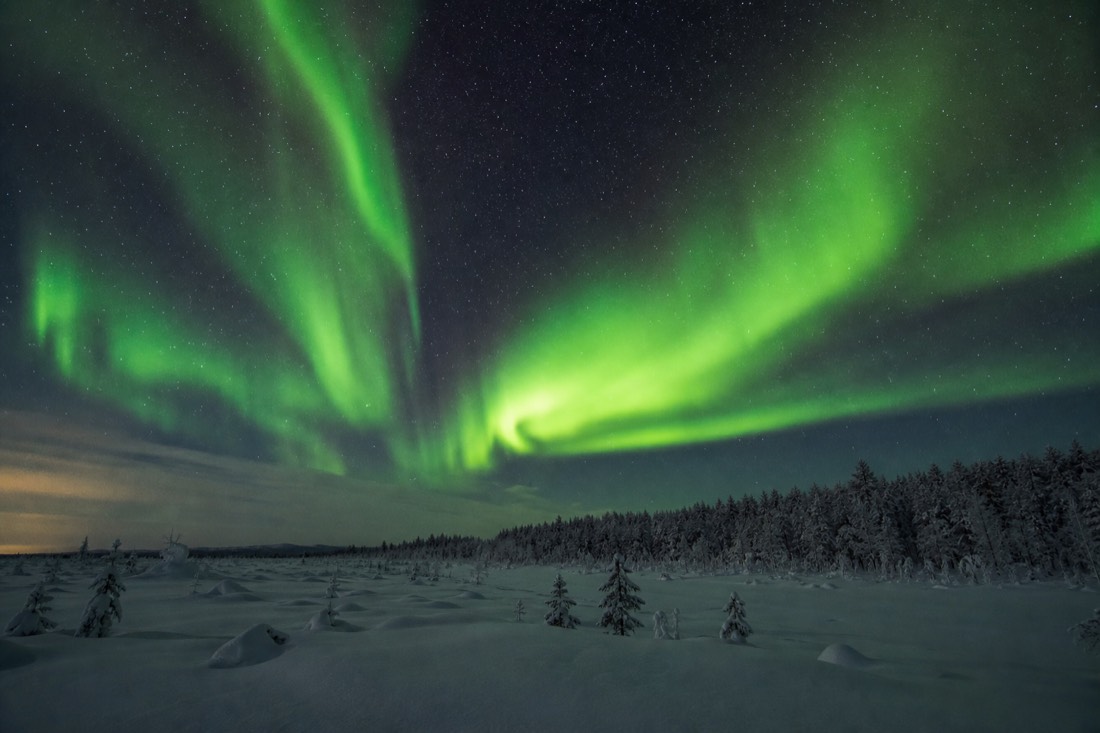
There is a real reason the aurora has been in the news more than usual, and it is not a marketing cycle. The sun runs on an eleven-year rhythm, that rhythm hit its peak in October 2024, and the elevated activity has not finished yet.
What is actually happening?
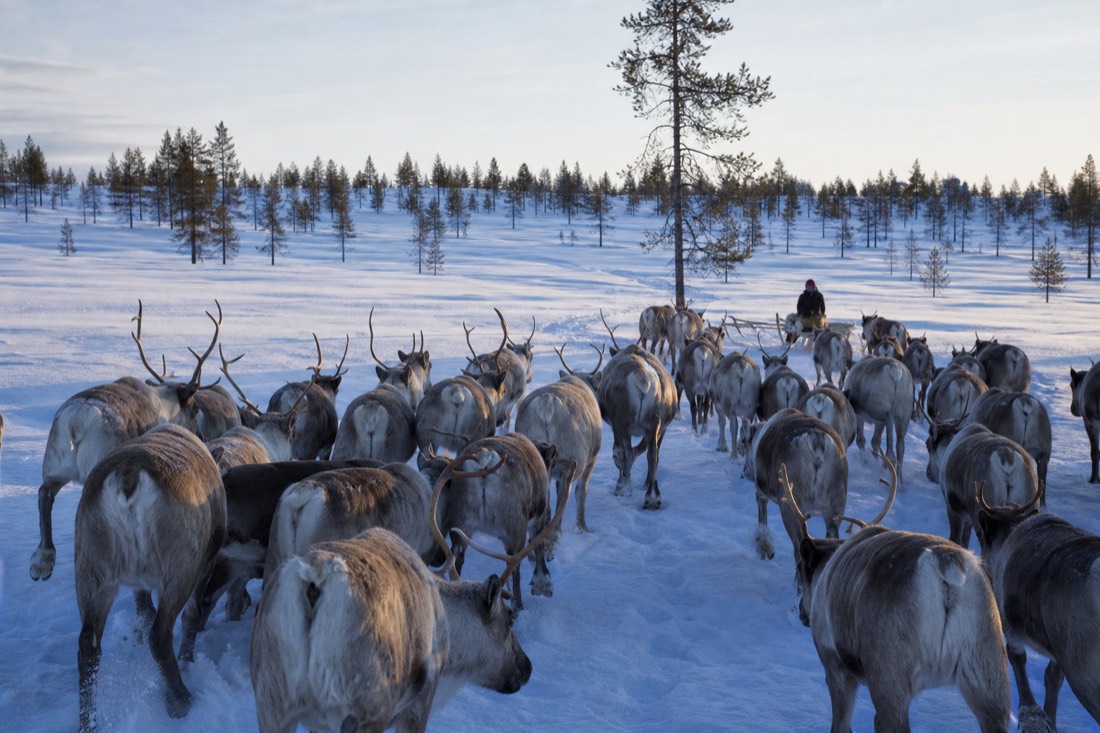
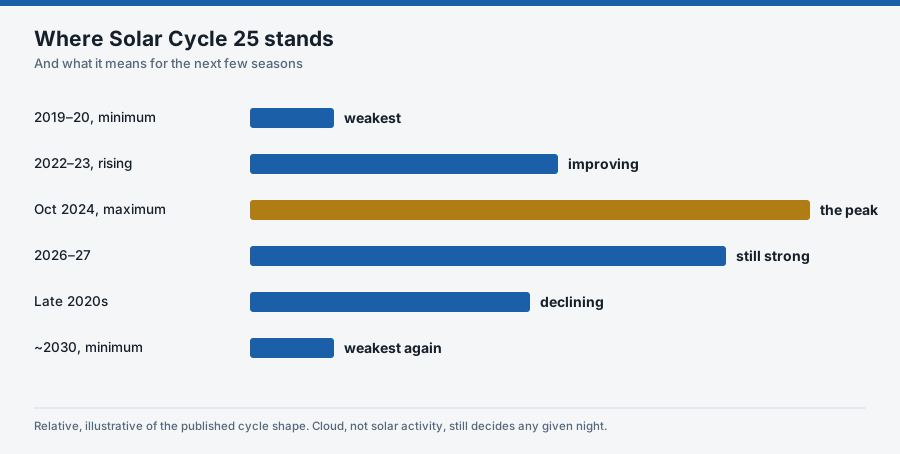
Solar Cycle 25 reached its maximum in October 2024, and activity remains elevated through 2026. The September to March 2026/27 season is expected to be a strong one for aurora displays.
The sun's magnetic activity rises and falls over roughly eleven years. More activity means more solar wind and more geomagnetic disturbance, which means more frequent and more southerly aurora. NOAA's Space Weather Prediction Center publishes a solar cycle progression chart, updated in August 2026, showing Cycle 25 tracking within its predicted range.
The practical upshot is that the background rate is better right now than it was five years ago, and better than it will be five years from now.
How much does it actually change your odds?
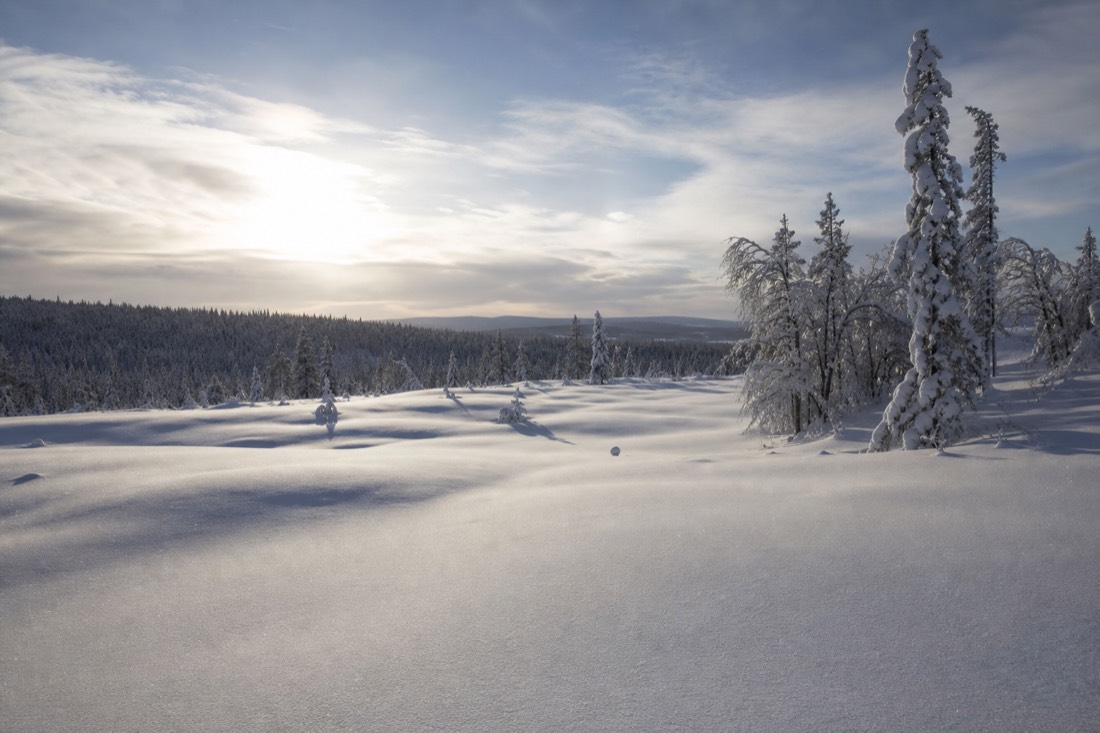
Less than the headlines suggest, because the limiting factor in Finnish Lapland is cloud rather than solar activity. A more active sun raises the ceiling; it does not clear the sky.
| Factor | Who controls it | How much it matters |
|---|---|---|
| Solar activity | Nobody, it is the cycle | Sets the background rate |
| Cloud cover | Nobody, but a guide can drive away from it | The usual reason you see nothing |
| Number of nights you book | You | The single biggest lever you hold |
| How far north you are | You | Helps, less than nights |
| Light pollution | You, and your tour | Real, and why tours drive out |
| Time of night | You | Best around midnight, ±2 hours |
Read the third row again. The Finnish Meteorological Institute puts the aurora at roughly 50 per cent of dark, cloudless nights at Lapland ski resorts. Solar maximum improves that ceiling. It does nothing about the word "cloudless".
Is there urgency?
Some, and it is genuine rather than manufactured. Activity declines from a solar maximum over the following years, so the next few seasons are better than the ones after them.
This is one of the rare cases where "book soon" is not simply a sales line. The cycle is real, it is published, and it is heading downward from here. Whether that translates into your particular week is another matter entirely.
The honest framing: if seeing the aurora is on your list and you were going to go within the next few years anyway, doing it in the 2026/27 or 2027/28 season is a better bet than waiting until 2030. If you are choosing between one night this winter and three nights in two winters' time, take the three nights.
What a good aurora plan looks like this season
Three nights of attempts, in the darkest window you can manage, with a guide who will drive. Everything else is optimisation around the edges.
| Decision | Best choice | Why |
|---|---|---|
| Number of nights hunting | Three | Turns a coin flip into a likely outcome |
| Time of night | Around midnight, ±2 hours | The Finnish Meteorological Institute's window |
| Month | Anywhere from late August to early April | March adds deep snow and long days |
| Group size | Smaller | A minibus repositions faster than a coach |
| Guided or independent | Guided, if you want the odds | Only a vehicle can outrun cloud |
| Photographs | A tour that includes a photographer | Long exposures in the cold are hard |
The small-group point is underrated. When a guide decides the clear sky is forty minutes away, a full coach takes far longer to move than a minibus, and that delay is sometimes the whole difference. Our aurora guide covers what else separates a good hunt from a bus ride.
The cycle in context
| Roughly when | Where Cycle 25 sits | What it means for a trip |
|---|---|---|
| 2019 to 2020 | Cycle minimum | Weakest background rate |
| 2022 to 2023 | Rising | Improving noticeably |
| October 2024 | Maximum | The peak of this cycle |
| 2026 to 2027 | Elevated, declining slowly | Still a strong window |
| Late 2020s | Declining | Weaker than now |
| Around 2030 | Approaching minimum | Back to the weakest background |
The window you are in is the fourth row. It is not the peak, and it is meaningfully better than what follows, which is a real if modest reason not to defer a trip you were going to take anyway.
What not to conclude
That you will definitely see it. A strong solar cycle is a better background, not a promise, and any operator or site treating it as one has stopped being useful to you.
Some listings offer a money-back or free-repeat term if nothing appears. That is a real commercial promise from that operator, stated on the listing, and it is a sensible way to shift risk. It is not a guarantee of a sighting, and the distinction matters more in a season when everyone is being told the sun is cooperating.
Book the nights, dress properly, pick a guide who drives, and treat the sky as the one thing nobody in the transaction controls. Our photography guide covers getting the images if that is the real goal.