Husky Safaris in Lapland: Self-Drive or Passenger, and How Far You Really Go
The noise before the start is the thing nobody warns you about. Forty dogs screaming to be let go, and then complete silence the second they are.
 Written with Aino Korhonen, Lapland tour specialist and Arctic experience guide
Short answer
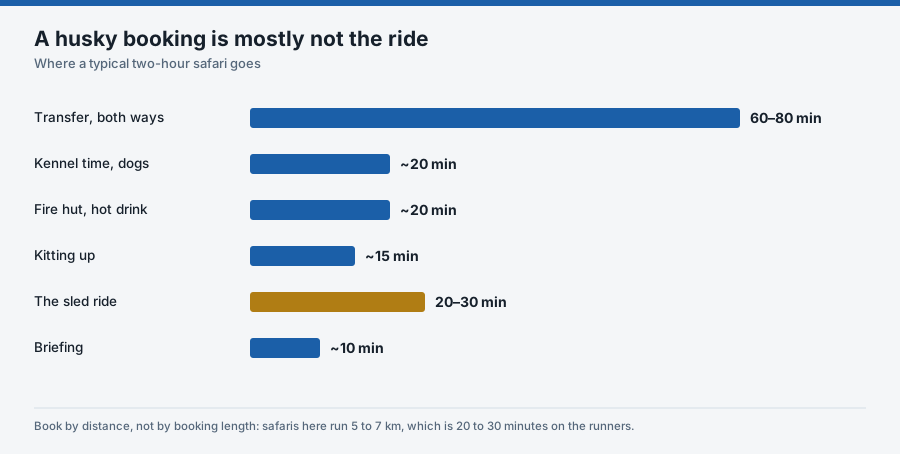
The question that decides everything is whether you drive the sled yourself, standing on the runners and working the brake, or ride as a passenger in the basket while a musher drives. Typical safaris here run 5 to 7 km, which is roughly 20 to 30 minutes of actual sledding, with the kennel visit, briefing and fire hut making up the rest of the booking.
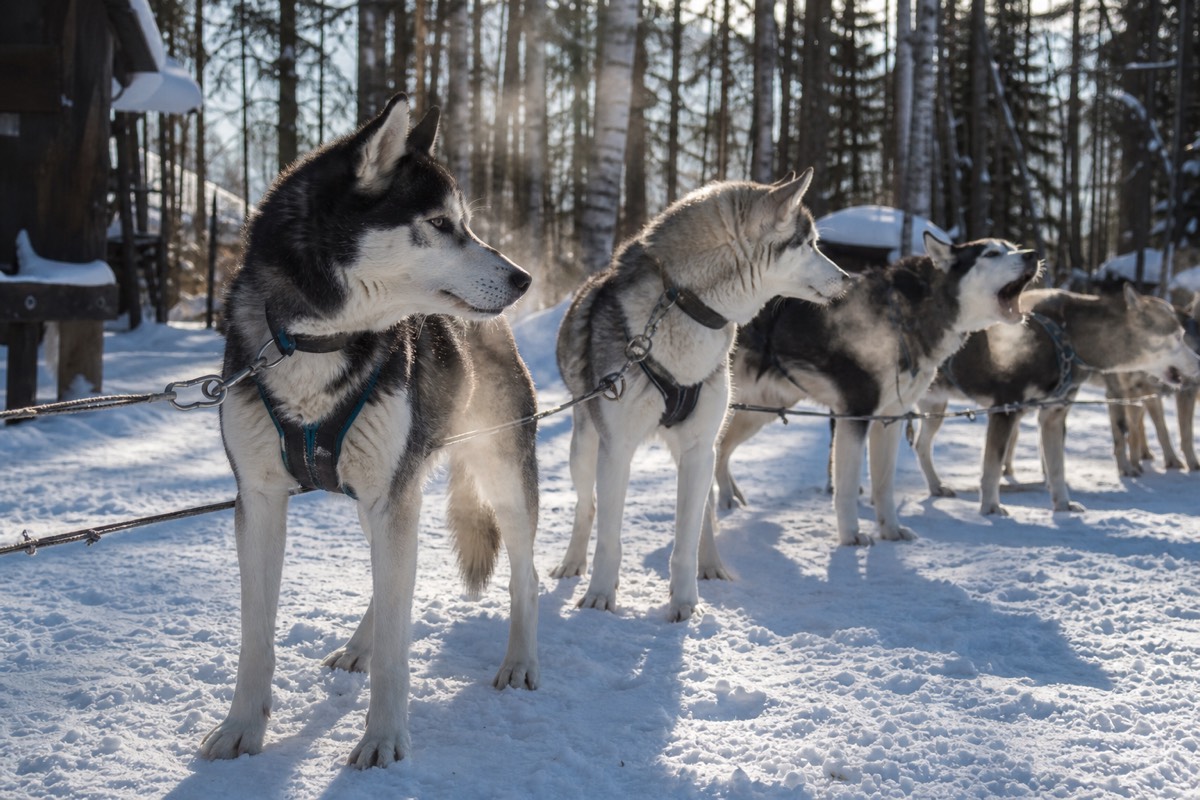
Huskies do not wait quietly. From the moment the sleds are lined up they scream, lunge and haul against the lines, and the sound carries across the whole yard. Then the snow hook comes up and it stops instantly, replaced by the sound of runners on snow and nothing else. That switch is the thing people remember, more than the distance, more than the scenery.
Do you drive the sled yourself?
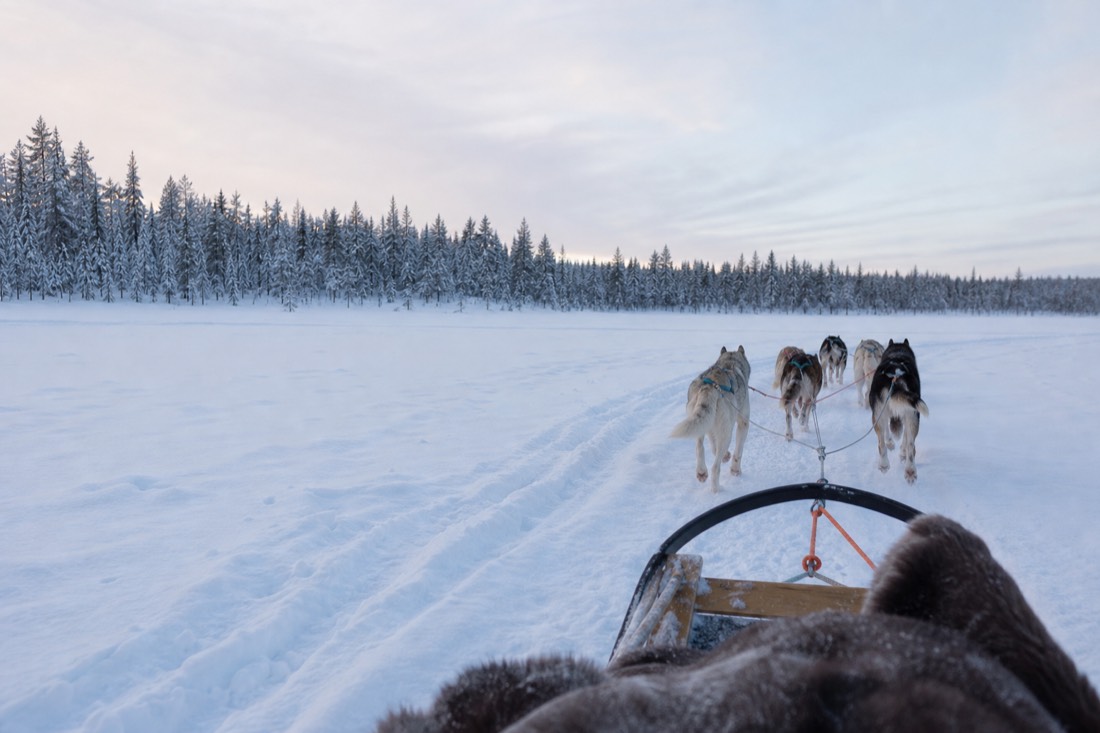
It depends entirely on the tour, and it is the single most important thing to check before booking. On a self-drive safari you stand on the runners, work the brake and steer your own team, usually swapping with a partner halfway. As a passenger you sit in the basket under a blanket while a musher drives.
Both are real versions of the experience. Self-drive is more involving and more physical, and you spend a fair amount of it concentrating on the brake rather than looking at the forest. Riding in the basket is warmer, calmer, and far better for young children or anyone with mobility limits. It is also the only option on some tours.
Every tour page on this site states which it is, taken from the operator's own listing. Three of the four husky safaris here are explicitly self-driven.
| Format | What you do | Better for | Watch out for |
|---|---|---|---|
| Self-drive, two per sled | Stand on runners, brake, steer, swap halfway | Adults, anyone wanting to participate | You get roughly half the driving time |
| Self-drive, solo sled | Drive the whole way yourself | Confident riders, solo travellers | Usually costs more, not always offered |
| Passenger in basket | Sit, wrapped, while a musher drives | Young children, limited mobility | Colder, because you are not moving |
| Short kennel ride | A brief loop, often part of a bigger tour | Bundled village and farm trips | Very short, minutes rather than tens of minutes |
How far do you actually go?
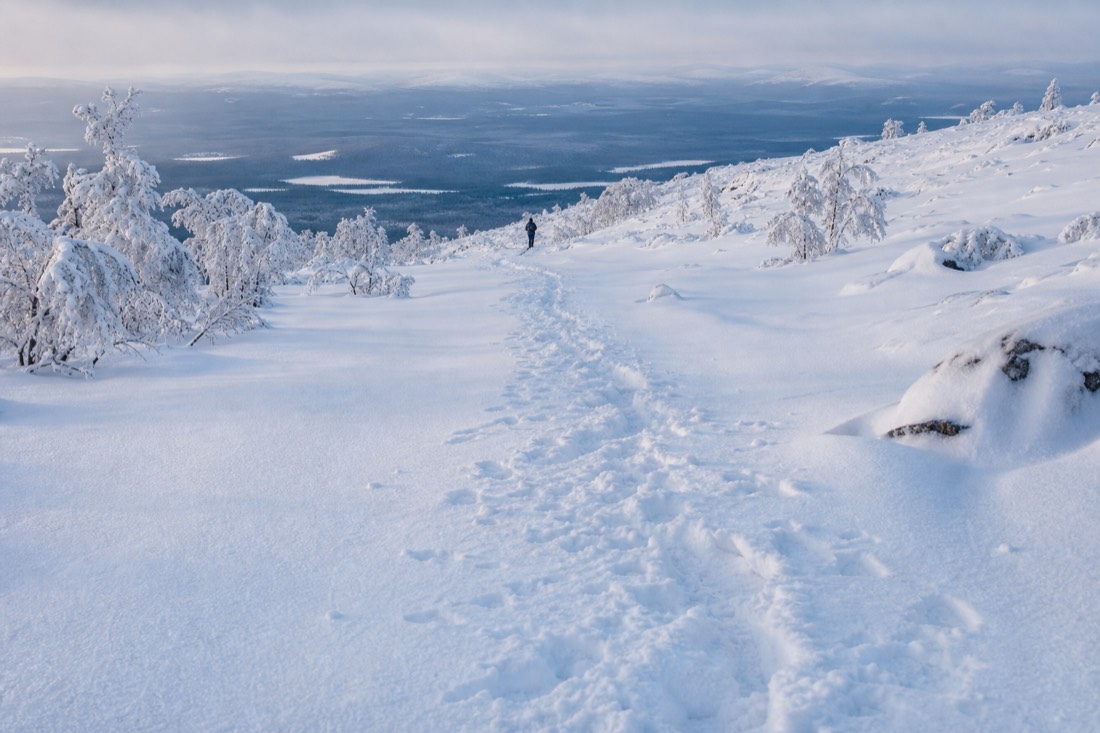
Typically 5 to 7 km on the safaris listed here, which is about 20 to 30 minutes on the sled. The booking length is longer because the kennel visit, the briefing and the fire hut are part of the product, not padding.
Snow conditions decide how much of the season a kennel can run: the Finnish Meteorological Institute records snow on the ground in Lapland for over half the year, deepest around mid-March. This is where expectations most often miss. A two-hour booking is not two hours of sledding. Nobody advertises it as such, but "2 hours" in a headline reads as ride time to most buyers, and then the ride is twenty-five minutes.
That is not a swindle, and the extra time is genuinely worth having. You meet the dogs, you learn how a team is put together, you warm up by a fire. But if what you want is a long run, look at distance rather than duration, and book the longer safari rather than the longer booking.
| Safari | Distance | Format |
|---|---|---|
| Rovaniemi, Apukka | 6 km | Self-driven |
| Levi, self-drive adventure | 7 km | Self-driven |
| Levi, snowy forest ride | 5 km | Self-driven |
| Rovaniemi, daytime safari | Stated on the listing | Check the listing for format |
What about the dogs?
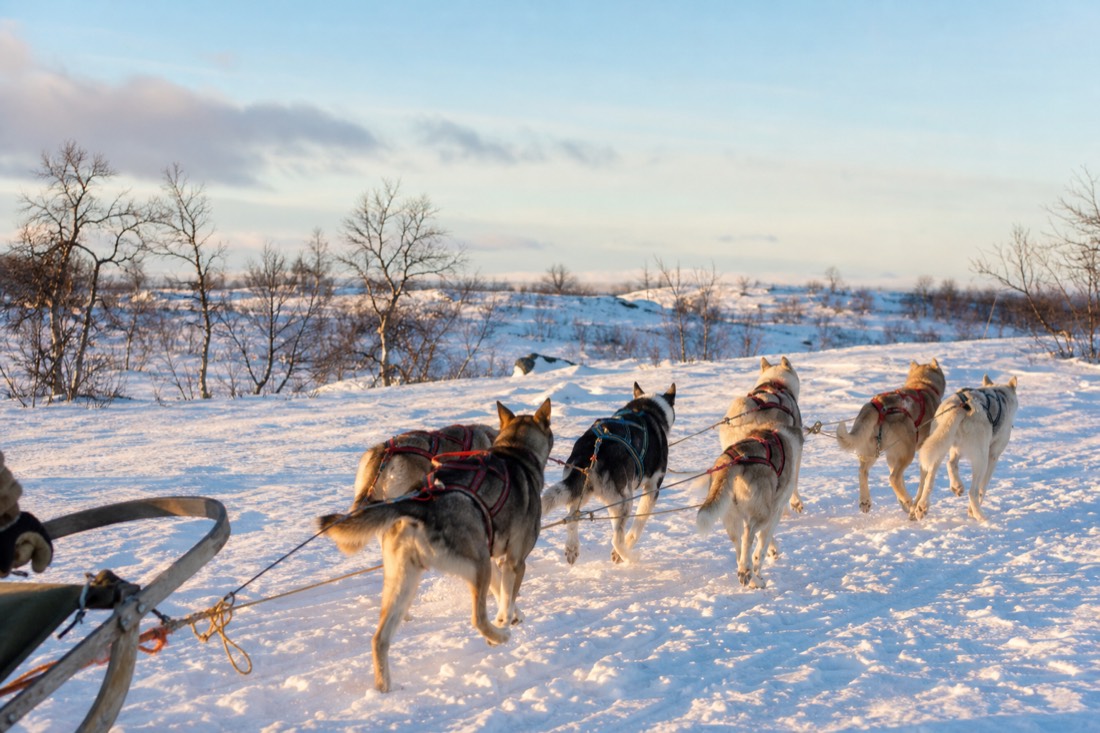
A fair question to ask, and one we will answer honestly by saying what we could not confirm. We could not verify which Finnish regulation or certification governs sled-dog welfare against a primary source, so we are not going to state one as fact.
What we can tell you is what is reported rather than verified. Operator sites citing Finnish legislation describe minimum enclosure sizes and a requirement to water dogs several times a day in freezing conditions. There is a Finnish certification scheme, Green Activities, that includes sled-dog welfare criteria among its sustainability requirements. We found these on operator and industry pages rather than on a regulator's own site, so treat them as indicative rather than settled.
What you can do is more useful than anything we could write. Read the recent written reviews for how the kennel is described, since visitors notice and mention it. Ask the operator directly before you book. Operators who look after their dogs are usually pleased to be asked, and a vague answer tells you something.
Huskies or reindeer, if you only do one?
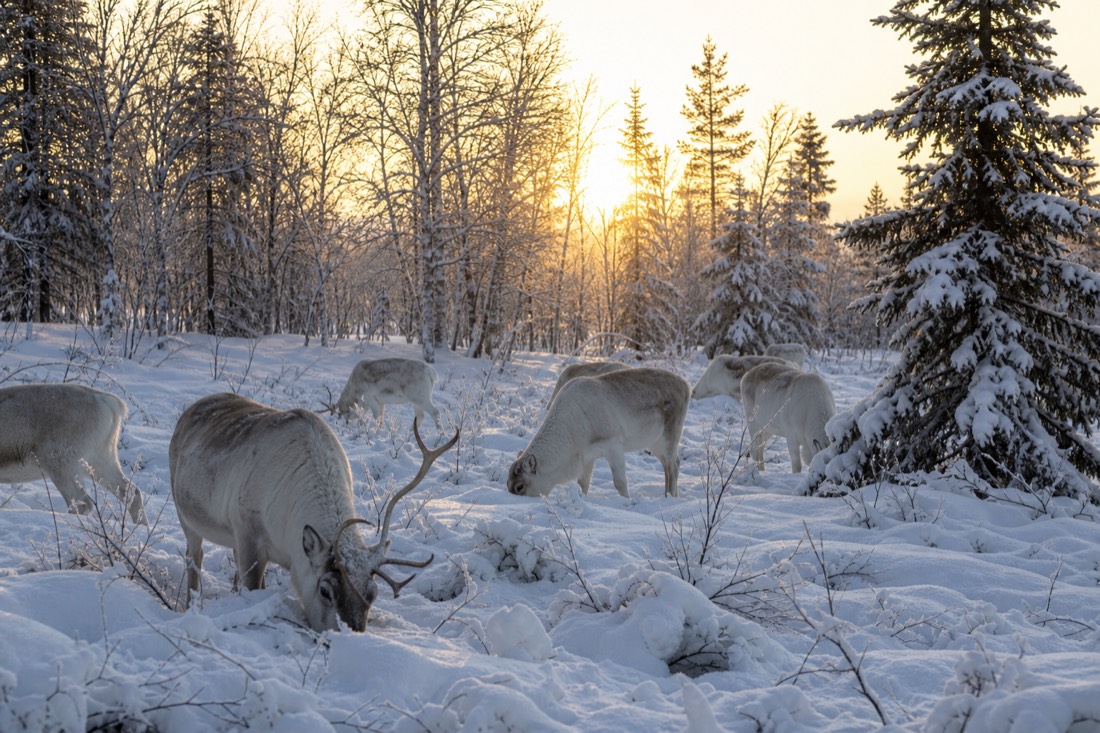
Huskies for speed, noise and a story. Reindeer for quiet, walking pace and the herder's world. They are not competing versions of the same thing, and families with small children usually prefer the reindeer.
| Husky safari | Reindeer sleigh | |
|---|---|---|
| Pace | Fast, genuinely exciting | Walking pace |
| Noise | Very loud before the start | Almost silent |
| Do you steer? | Often yes | No |
| Typical ride length | 20 to 30 minutes | Usually shorter |
| Suits young children | Sometimes, as passengers | Yes |
| The larger part of the booking | The ride and the kennel | The farm visit |
| The thing you remember | The launch | The quiet |
Reindeer herding is a working livelihood rather than a visitor attraction, and the Reindeer Herders' Association is the body that represents it. If you have the time and budget for both, do both, because they genuinely feel different. If you can only do one and you are travelling with adults, take the huskies. Our reindeer category page covers the other side of that choice.
What does a booking actually include?
Gear, a briefing, kennel time and the ride. What varies between operators is transfers, food and whether photographs are provided, and those differences explain most of the price gap between otherwise similar safaris.
| Element | Usually included | Worth checking |
|---|---|---|
| Thermal overall and boots | Yes, on all four listed here | Sizes for children |
| Kennel visit and dog time | Yes | How long, and whether you meet the puppies |
| Safety briefing | Yes | Whether it covers solo driving |
| Hot drink or fire hut stop | Usually | Whether food is included or extra |
| Hotel pickup and drop-off | Varies by operator | Pickup radius from the city centre |
| Photographs | Sometimes | Whether they cost extra |
| Certificate or licence novelty | Sometimes | Nice for children, not worth paying for |
The transfer line is the one that changes the real cost most. A safari that includes hotel pickup from central Rovaniemi saves you a taxi in each direction, which in peak season is not trivial.
Which one should you book?
The most-reviewed option in Rovaniemi is self-driven at 6 km, rated 4.6 across 1,568 GetYourGuide reviews. In Levi, the 7 km self-drive safari is the longest run of the ones listed here.
If you are based in Rovaniemi, the Apukka husky adventure has by far the longest track record, and you can check live availability and prices on the operator's listing. If you are in Levi and want maximum time on the runners, the 7 km self-drive safari is the longer ride. Our base comparison covers which town suits which trip if you have not booked accommodation yet.
Where does a two-hour husky booking actually go?
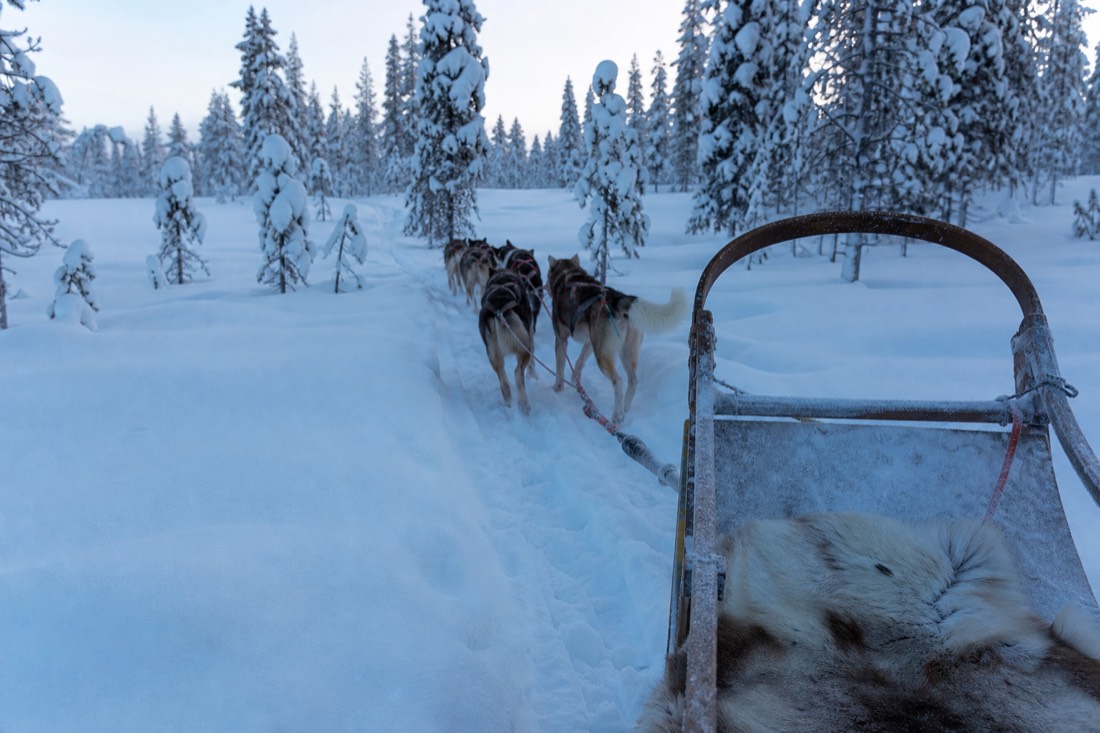
Not into sledding, mostly. One of the listings here states its own ride time plainly at about 20 to 30 minutes inside a booking that also covers transfers, kitting up, a briefing and kennel time. That gap between booked hours and runner time is the single biggest source of disappointment in Lapland husky reviews.
Nothing dishonest is happening. Operators publish the length of the booking, because that is the block of your day they are taking, and the sled run was never advertised as filling it. The problem is that "2 hours" reads as ride time to somebody skimming twelve listings on a phone, and the correction only arrives on the day.
| Part of the booking | Roughly what it takes | Can you shorten it |
|---|---|---|
| Transfer out to the kennel and back | The largest single block on most bookings | No, the farms sit outside the city |
| Kitting up in thermal overalls and boots | Longer with a group and with children | No, and you would not want to |
| Safety briefing and meeting your team | Longer where you drive yourself | No, it is the reason self-driving works |
| The sled run itself | The distance the listing states | Only by booking a longer distance |
| Kennel time, hot drink, photographs | Varies most between operators | This is the part that differs on price |
The fix is to stop reading the hours and start reading the kilometres. A 5 km safari and a 7 km safari tell you something real, while "2 hours" and "3 hours" mostly describe how long the operator has your afternoon. Every husky listing on this site states its distance, which is why the table in the next section is built on distance rather than duration.
One more practical note. Where transfers are included, the transfer time usually sits outside the stated safari duration, so the door-to-door commitment is longer than the booking suggests. Plan one husky safari per day and nothing tight afterwards.
How do the four husky safaris here actually differ?
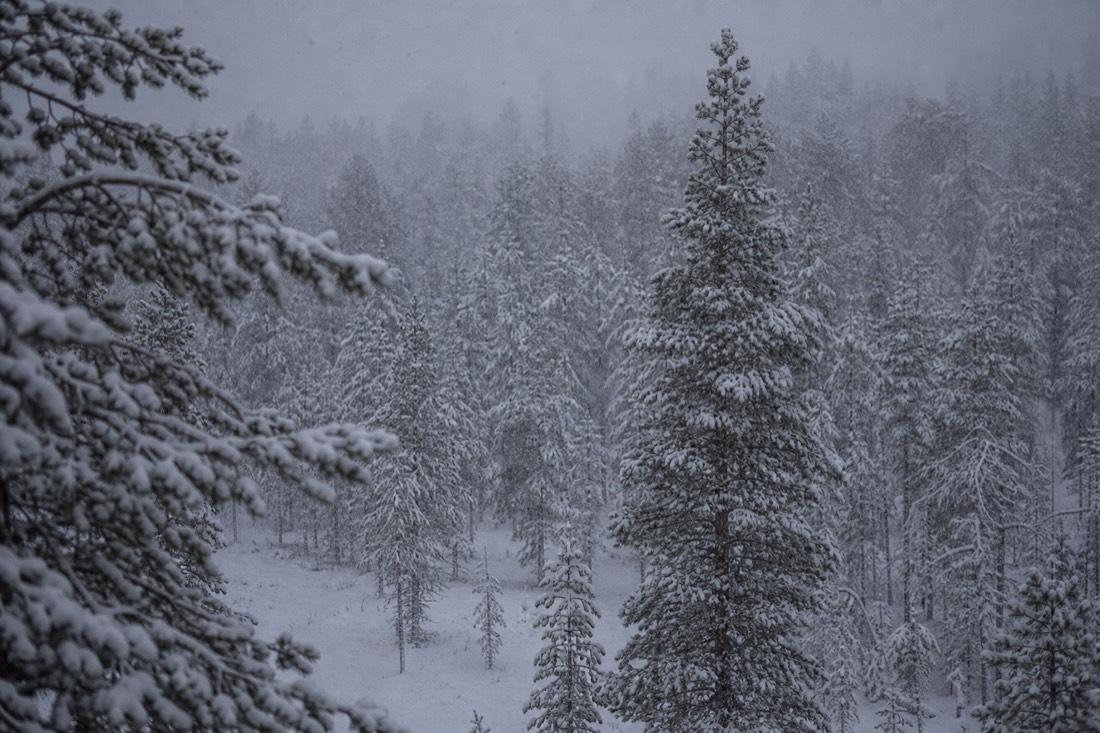
All four are self-drive, which is the important thing they have in common. They separate on distance, on base town, and on whether you are collected from your hotel. Distance runs from 5 km to 7 km, and the review counts differ by a factor of ten.
| Listing | Base | Distance | Verified rating | Notable from the listing |
|---|---|---|---|---|
| Apukka Husky Adventure | Rovaniemi | 6 km | 4.6 across 1,568 | Two per sled and you can swap, transfers where needed, animal-welfare certified |
| Daytime Husky Safari | Rovaniemi | 5 km | 4.6 across 1,036 | States the ride at about 20 to 30 minutes, children ride in the sleigh |
| 7 km Self-Drive Adventure | Levi | 7 km | 4.7 across 502 | Longest run listed, two-person team per sled, swap halfway |
| Self-Driven Husky Ride | Levi | 5 km | 4.6 across 147 | Family-owned, log cabin to warm up, rescheduled or refunded at -30°C or below |
Two of those rows carry detail worth acting on. The Levi forest ride states a real cold-weather policy, rescheduling or refunding below -30°C, which is the sort of term most listings leave unsaid. And the Rovaniemi daytime safari is unusually honest about ride time, which is exactly the number the reviews on every other husky product argue about.
The review counts also tell you something the ratings do not. All four sit between 4.6 and 4.7, so the ratings barely separate them. The Apukka safari has simply taken far more people out, which makes its average the most reliable of the four rather than the best.
What Aino tells people choosing between husky safaris
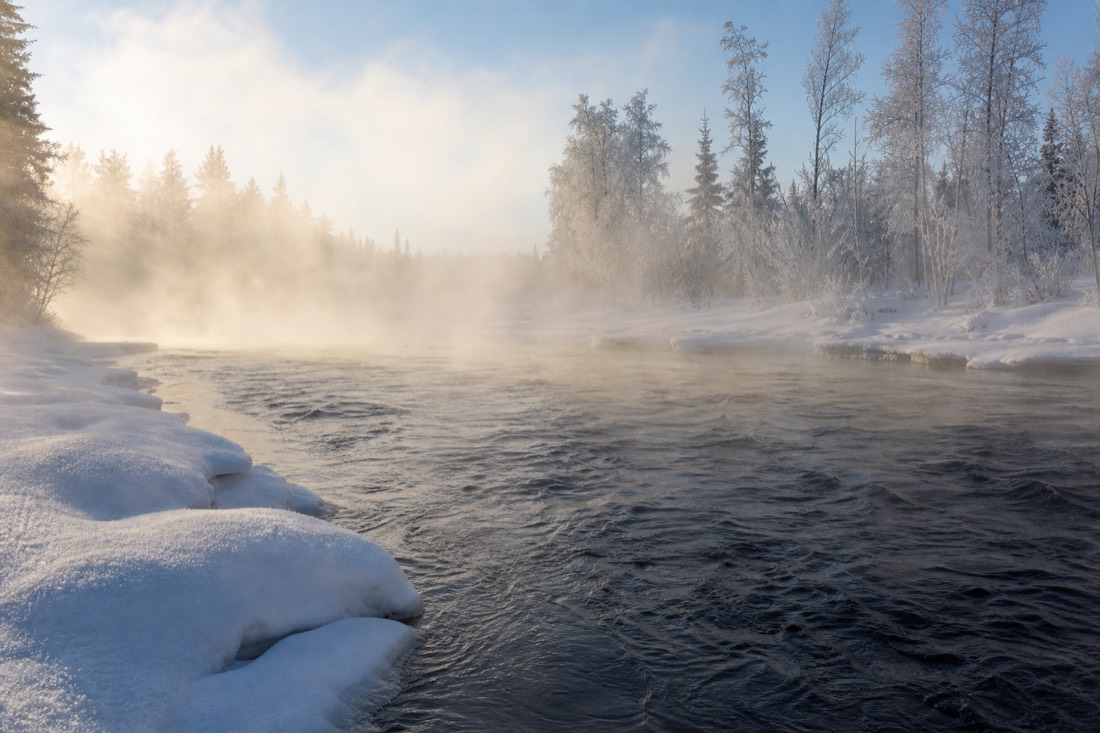
Aino Korhonen has planned Lapland trips since 2023 and by her own count has worked with more than 250 international travellers. On huskies the questions repeat almost word for word, and the answers rarely turn on which operator you pick.
The most common one is whether to drive or to ride. Every safari listed here is self-drive, and people booking for a nervous parent or a small child sometimes want the opposite. The workable version is a two-person sled where one drives and one sits, swapping at the halfway point, which three of these four listings describe explicitly.
The second is whether a longer distance is worth it. Going from 5 km to 7 km is a meaningful difference in runner time and a small difference in the day, so if the sledding is the reason you came to Lapland, book the distance rather than the hour.
The third is about the dogs, and it deserves a straight answer. Operators publish their own welfare arrangements, one of the listings here is described as animal-welfare certified and another states a no-kill policy and rescue programme. Finnish welfare regulation for sled dogs is something this site has not been able to confirm against an official source, so we describe what the operators say and point you at them rather than stating a rule we cannot show you.
| What people ask | The short answer | Where it actually matters |
|---|---|---|
| Should we drive or ride? | Both, on a two-person sled | Nervous first-timers and mixed-age pairs |
| Is 7 km worth it over 5 km? | Yes if sledding is the point of the trip | Levi has the longest run listed here |
| Which has the best rating? | They are all 4.6 to 4.7 | Pick on distance and pickup instead |
| Are the dogs well treated? | Ask the operator, they publish it | Listings differ in how much they state |
| Do we need our own gear? | No, thermals and boots are lent | Check sizes if you have young children |
If you are still deciding between huskies and a reindeer farm, the section above compares them directly, and our clothing guide covers the layers the operator does not lend you.
When in the season should you book a husky safari?
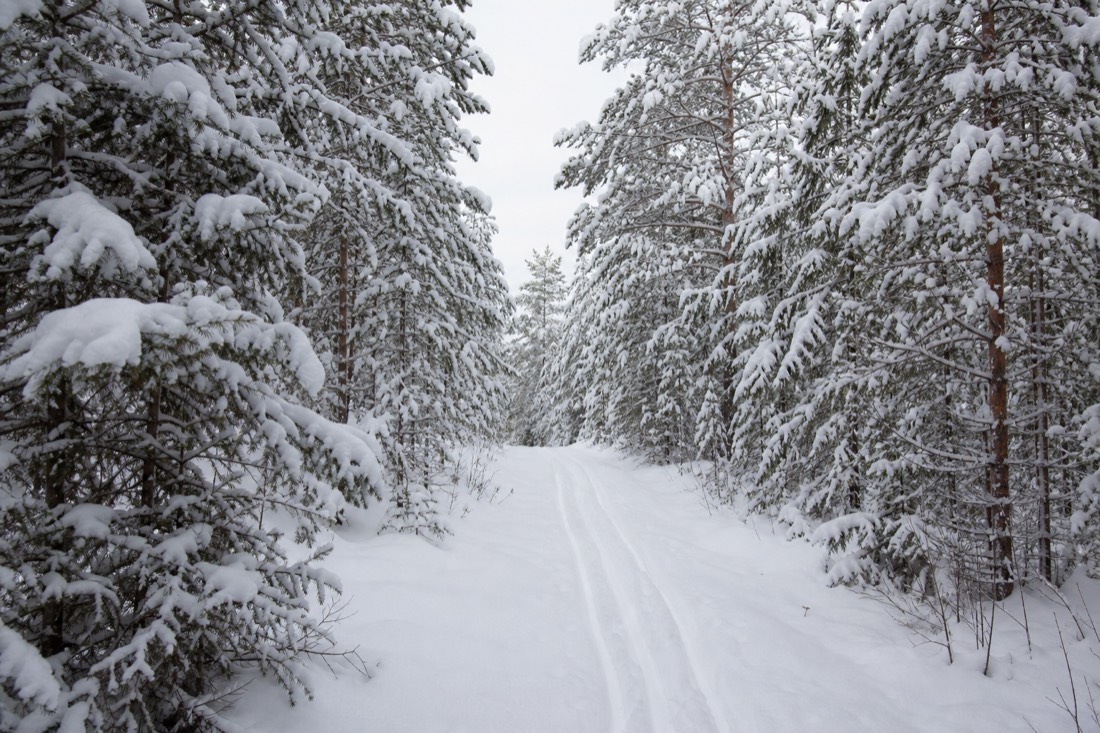
Any time there is reliable snow, which in Rovaniemi runs roughly November to May per Visit Finland. The trade is not about whether the safari runs. It is about daylight, cold and how many other people are booked onto the same afternoon.
Lapland's winter begins around mid-October and lasts about 200 days on the Finnish Meteorological Institute's 1991 to 2020 normals, and snow is deepest around mid-March at 60 to 90 cm in northern Finland. That is the quiet argument for March: the trails are at their best exactly when the light is coming back.
| Month | Snow and trail conditions | Daylight for a daytime safari | What to expect on price and crowds |
|---|---|---|---|
| November | Arriving, usually reliable by late month | Short and fading | Quiet, the cheapest end of the season |
| December | Reliable | Shortest of the year, blue rather than dark | Peak demand, listings sell out first |
| January to February | Deep and consistent | Growing, and very cold | Classic conditions, coldest weeks |
| March | Deepest of the year | Long and bright | The best all-round compromise |
| April | Softening, still workable early | Long | Season winding down, quieter again |
The cold column matters more on a husky safari than on most activities, because you are outdoors and moving slowly. Rovaniemi's January average sits at -12.2°C on the 1991 to 2020 normals, and one of the Levi listings states that it reschedules or refunds at -30°C or below, which tells you where operators themselves draw the line.
December is the month that catches people out, and not for the reason they expect. The safaris run fine. The problem is that the best-reviewed listings fill first, and a family arriving with nothing booked finds the 4.6 and 4.7 options gone. Most listings here cancel free up to 24 hours ahead, so holding a date early costs nothing and protects the choice. Our month-by-month guide works through the same trade for the rest of the activities.
Common questions
Do I drive the husky sled myself?
On a self-drive safari, yes: you stand on the runners, work the brake and steer, usually swapping with a partner halfway. On other tours you ride as a passenger while a musher drives. Each tour page here states which, taken from the operator's listing.
How long is the actual ride?
On the safaris listed here, roughly 20 to 30 minutes for a 5 to 7 km run. The rest of the booking is the kennel visit, the briefing and usually a fire hut, which is a genuine part of the experience rather than filler.
Is it safe for children?
As passengers, yes, subject to the operator's stated minimum age on each listing. Children generally cannot drive a sled. Be aware that the noise before the start genuinely frightens some small children, which is one reason reindeer sleighs often work better for them.
Do I need experience?
No. Self-drive safaris are built for complete beginners, with a briefing and an easy first section. The main skill is using the brake, and the team follows the sled in front regardless.
How cold is it?
Less cold than a snowmobile, since you are working rather than sitting still in wind. Passengers get colder than drivers, which is worth knowing when you decide who takes the first leg. Our what to wear guide covers the layers that matter.