What to Wear in Finnish Lapland (and Why Jeans Are the Classic Mistake)
The operator hands you a thermal overall and boots at the door. Everything that goes underneath it is on you, and that is where trips go wrong.
 Written with Aino Korhonen, Lapland tour specialist and Arctic experience guide
Short answer
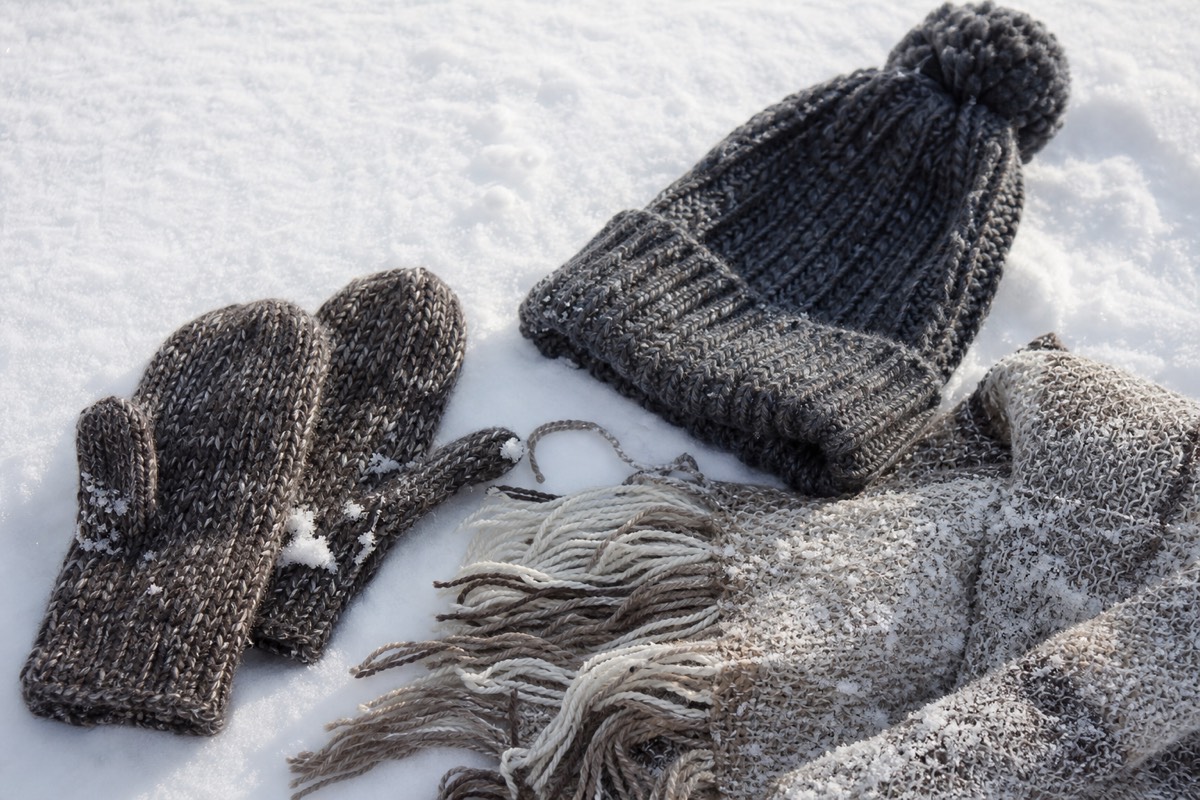
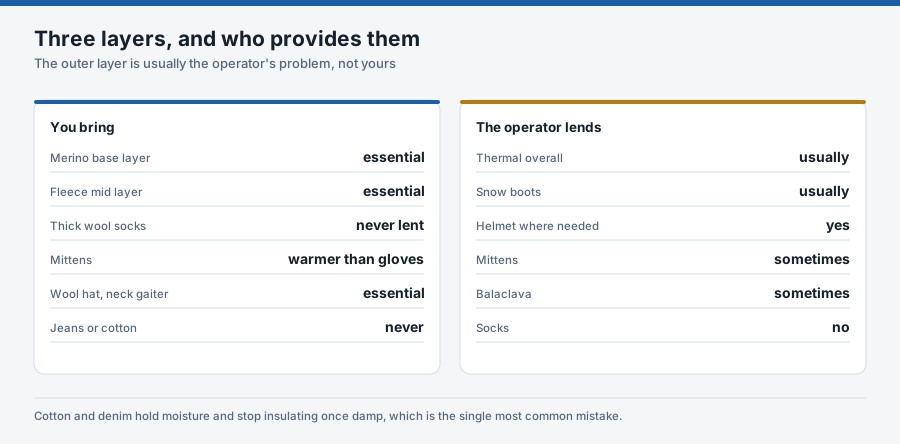
Three layers: a merino or synthetic base layer, a fleece or wool mid layer, and the thermal overall the operator lends you. Add wool socks, a proper hat, mittens rather than gloves, and a neck gaiter. No cotton and no denim anywhere, because both hold moisture and stop insulating the moment you sweat.
There is a moment on most Lapland activity mornings where somebody in the group realises their jeans were a mistake. It usually arrives about forty minutes in, once the cold has worked through the denim and settled somewhere it will stay all day. Nobody warned them, because most packing advice for Lapland is written by people who have never been handed a thermal overall and told to put it on over what they are already wearing.
What do you actually need to wear in Lapland?
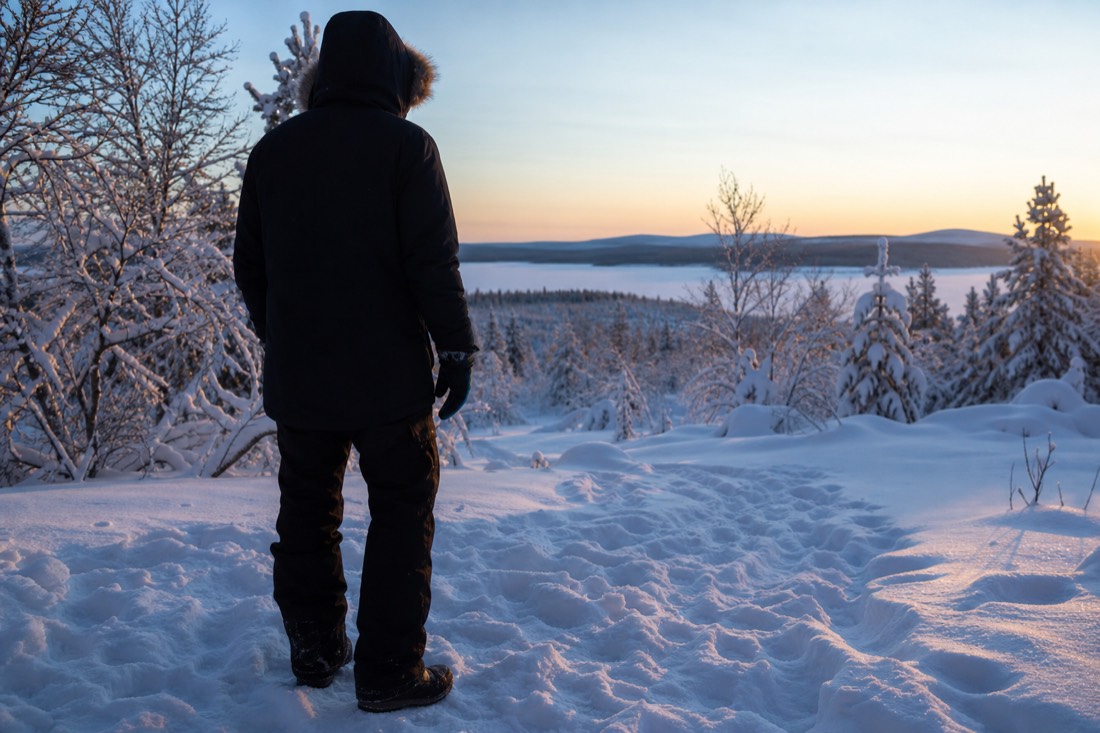
Three layers, and only one of them is yours to worry about on an activity day. A merino or synthetic base layer against the skin, a fleece or wool mid layer for warmth, and the operator's thermal overall on top. The overall is usually provided; the two underneath are not.
Finnish winters are long enough that locals treat this as routine rather than special equipment: the Finnish Meteorological Institute records snow on the ground in Lapland for more than half the year. This is the thing most packing lists get structurally wrong. They tell you to buy a serious winter coat. On an activity day you will not wear your coat, because the operator gives you a full thermal overall and snow boots that go over everything. What matters is what is underneath, and that is where a fleece beats a parka every time.
| Layer | What it does | Good | Bad |
|---|---|---|---|
| Base | Moves sweat away from skin | Merino wool, synthetic thermal | Cotton t-shirt, cotton long johns |
| Mid | Traps warm air | Fleece, wool jumper, light down | Anything tight, anything cotton |
| Outer | Blocks wind and snow | The operator's thermal overall | Your own ski jacket, usually unnecessary |
| Legs | The most commonly underdressed part | Thermal leggings, then soft trousers | Jeans, leggings alone, tights |
| Feet | Where cold is felt first | One pair of thick wool socks | Two thin pairs, cotton socks |
| Hands | Fingers go before anything else | Mittens, with thin liner gloves | Fashion gloves, anything unlined |
| Head and neck | Large heat loss area | Wool hat over the ears, neck gaiter | Headbands, scarves that come loose |
Can you wear jeans in Lapland?
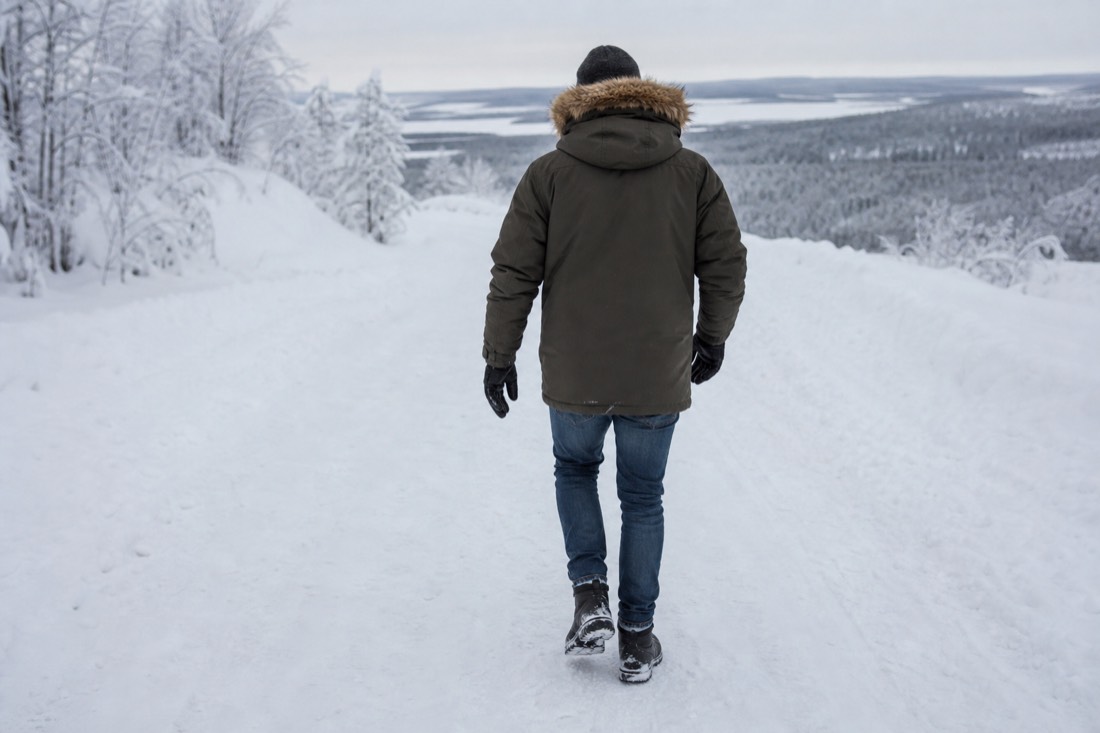
For a short walk around Rovaniemi, briefly, yes. For any activity, no. Denim is cotton, cotton absorbs moisture and holds it, and wet cotton against your legs at minus fifteen stops insulating entirely. It is the single most common clothing mistake visitors make.
The problem is not that denim is thin. It is that it fails in exactly the situation you will be in. You will sweat slightly while walking to the sled, some snow will land on you, and cotton takes all of that moisture and keeps it against your skin. Wool and synthetics keep insulating when damp. Cotton does the opposite.
This applies to more than jeans. A cotton t-shirt as a base layer causes the same problem higher up, and it is a mistake people make even when they have bought good outer clothing. If one rule survives from this page, make it that one.
What do the tour operators actually lend you?
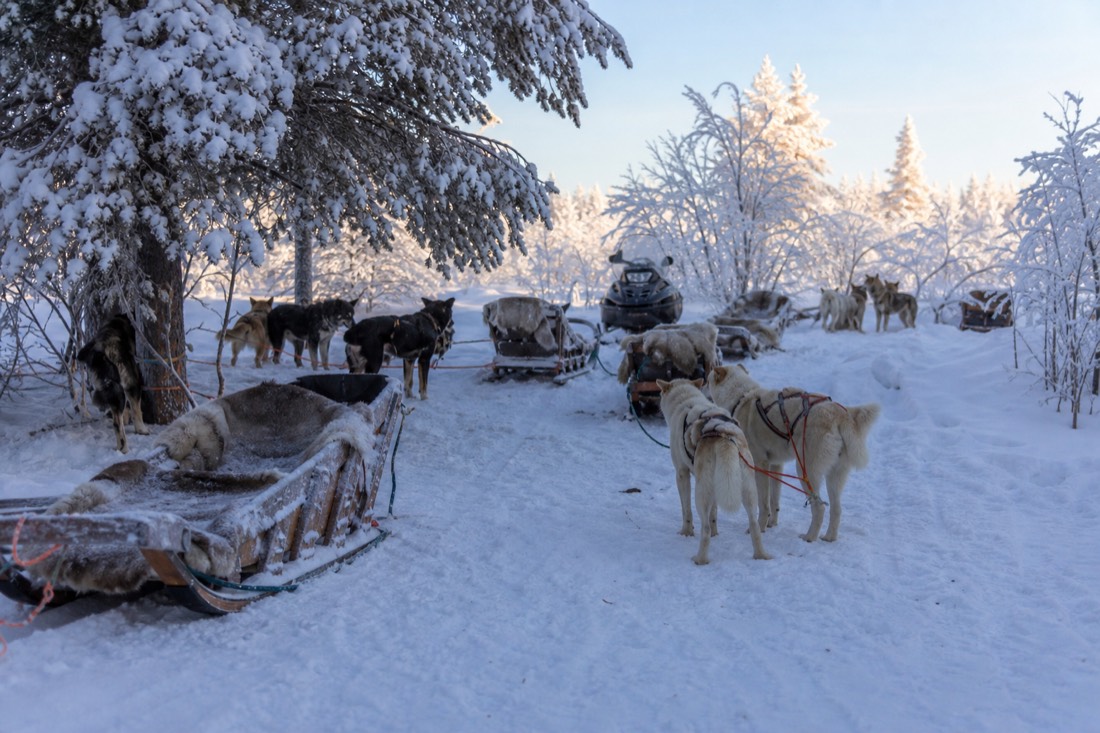
Most Lapland activity operators include a thermal overall and snow boots, and many add mittens, a balaclava and a helmet where the activity needs one. It is standard, but it is not universal, and each listing states its own position.
Check the individual tour rather than assuming. Every tour page on this site lists what that operator says is included, taken from their own listing. The most-reviewed husky safari in Rovaniemi provides the gear, and you can check live availability and what is included on the operator's listing before you decide what to pack.
The one thing operators almost never lend is socks, and cold feet ruin more Lapland days than cold anything else. Bring more thick wool socks than you think you need.
What should you buy before you go?
Very little, if you are sensible about it. Base layers, wool socks and mittens are worth buying and will be the difference between comfort and misery. A serious winter coat usually is not, because the operator's overall replaces it on the days that matter.
| Item | Buy before you go? | Why |
|---|---|---|
| Merino base layer, top and bottoms | Yes | The single highest-value purchase, and useless to skip |
| Thick wool socks, three pairs | Yes | Never lent, and cold feet end days early |
| Mittens | Yes | Warmer than gloves, and rarely provided in a size that fits |
| Wool hat covering the ears | Yes | Trivial cost, large effect |
| Neck gaiter or buff | Yes | Also protects your face on a moving snowmobile |
| Fleece mid layer | Probably own one already | Anything warm and non-cotton works |
| Heavy winter coat | Usually no | The operator's overall goes over everything anyway |
| Snow boots | Usually no | Provided by most operators, and bulky to fly with |
| Ski goggles | Only for snowmobiling | Helmets with visors are normally supplied |
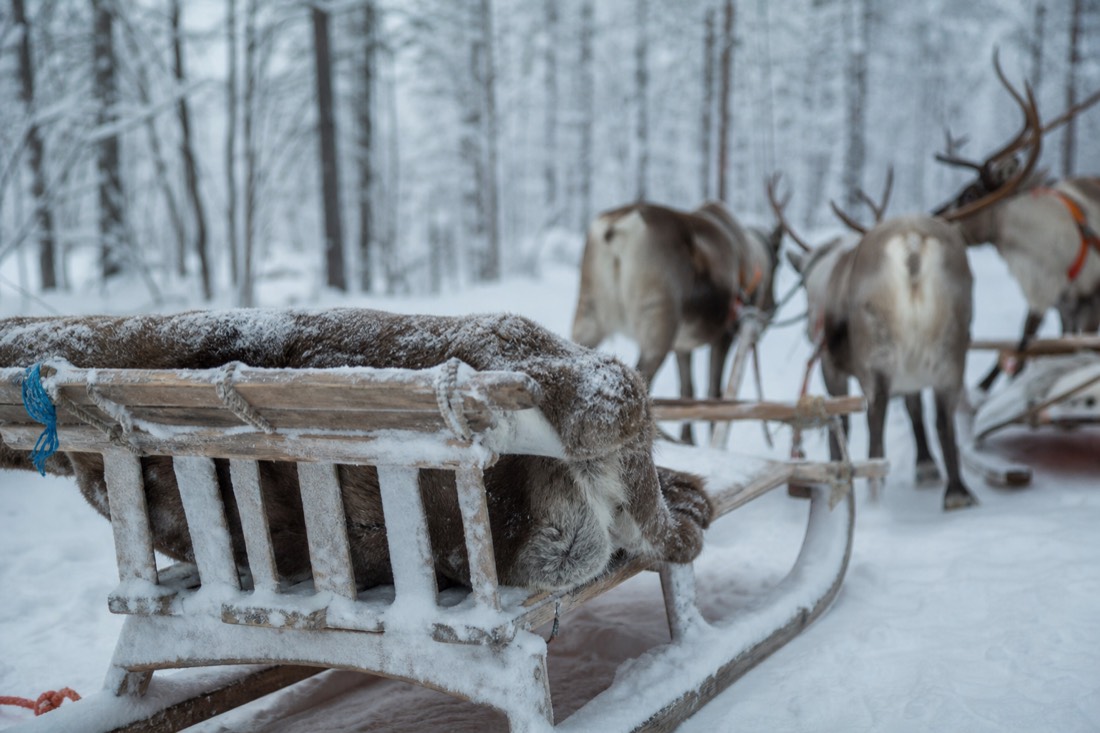
If you are travelling with children, err toward more layers rather than warmer ones, because a child who is too warm can take a layer off and a child who is cold cannot do anything about it. Activity minimum ages are stated on each listing, and the reindeer sleigh rides tend to suit small children better than the faster options.
What does each activity demand?
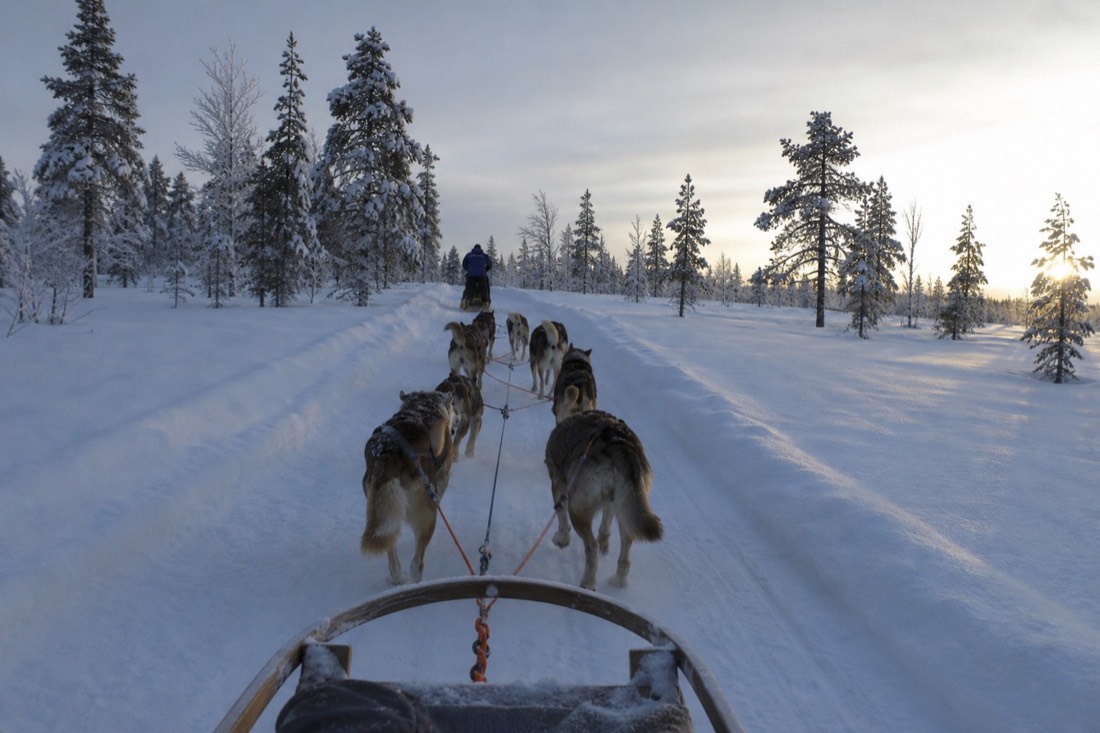
They are not equally cold. Sitting still on a moving snowmobile at speed is far colder than standing on husky sled runners, and an aurora tour is mostly standing still in the dark, which is the coldest thing you will do.
| Activity | How cold it feels | What matters most | Usually provided |
|---|---|---|---|
| Husky sledding, self-drive | Moderate, you are working | Mittens you can grip in | Overall, boots, sometimes mittens |
| Husky sledding, as passenger | Colder, you are still | Extra leg layer, blanket | Overall, boots, blanket |
| Snowmobile safari | Coldest moving activity, wind chill at speed | Face cover and goggles | Overall, boots, helmet with visor |
| Reindeer sleigh | Cold but brief and slow | Warm hat, since there is no helmet | Overall, blanket |
| Northern lights tour | Coldest overall, long periods standing | Base layers and thick socks | Overall, boots, hot drinks |
| Santa Claus Village | Mild, plenty of indoor breaks | Layers you can take off inside | Nothing, it is not a guided activity |
The pattern is that the less you move, the more your own layers matter. On a snowmobile the operator's kit does most of the work against wind chill. On an aurora night you are standing in a field for an hour, and that is where a merino base layer and thick socks earn their money. Our aurora guide explains why those tours run so late, which is also why they are so cold.
What about indoors and around town?
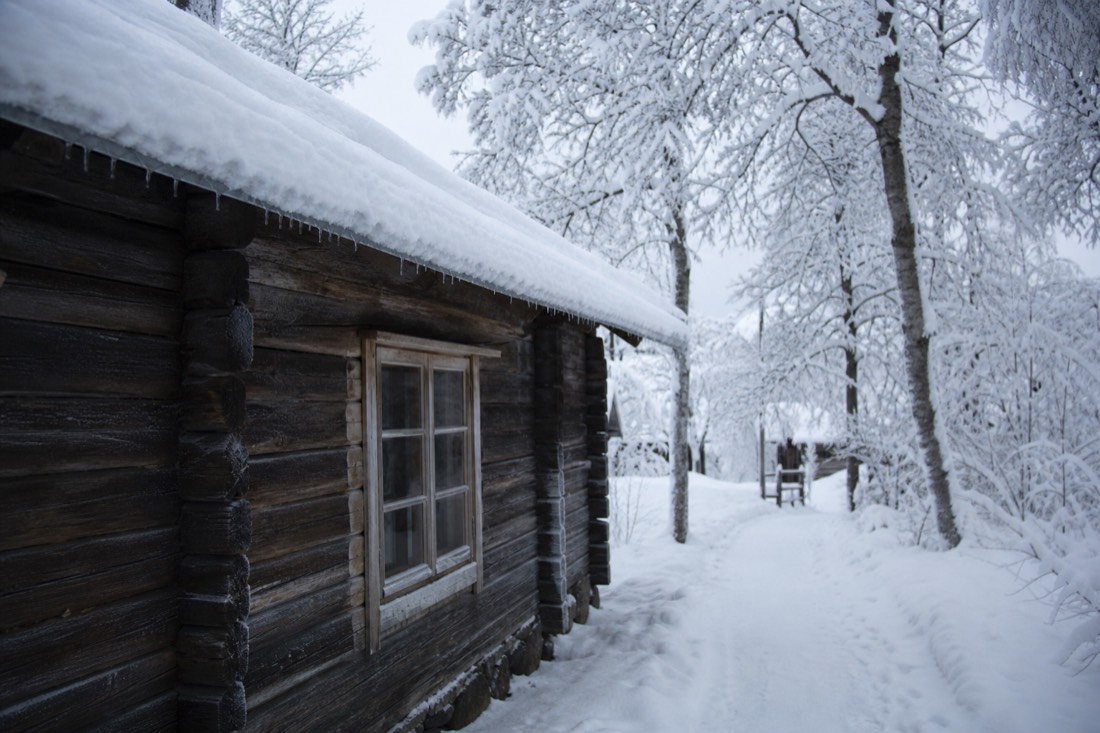
Normal winter clothes. Finnish buildings are heated properly and you will be overdressed the moment you step inside, which is the real argument for layers you can shed rather than one very warm coat.
Rovaniemi is a working city, not a wilderness camp, and Visit Rovaniemi lists Santa Claus Village itself as open year-round with normal indoor facilities. Restaurants, shops and hotels are warm. Jeans are fine here, which is where the confusion starts: you can wear denim for dinner and it will be perfectly comfortable, and that same denim will let you down badly on a snowmobile the next morning.
If you are staying somewhere with a sauna, and many places have one, remember it is a normal part of Finnish life rather than a spa treatment. Bring flip-flops and be prepared for it to be hotter than you expect.
How cold does it actually get, and does that change the kit?
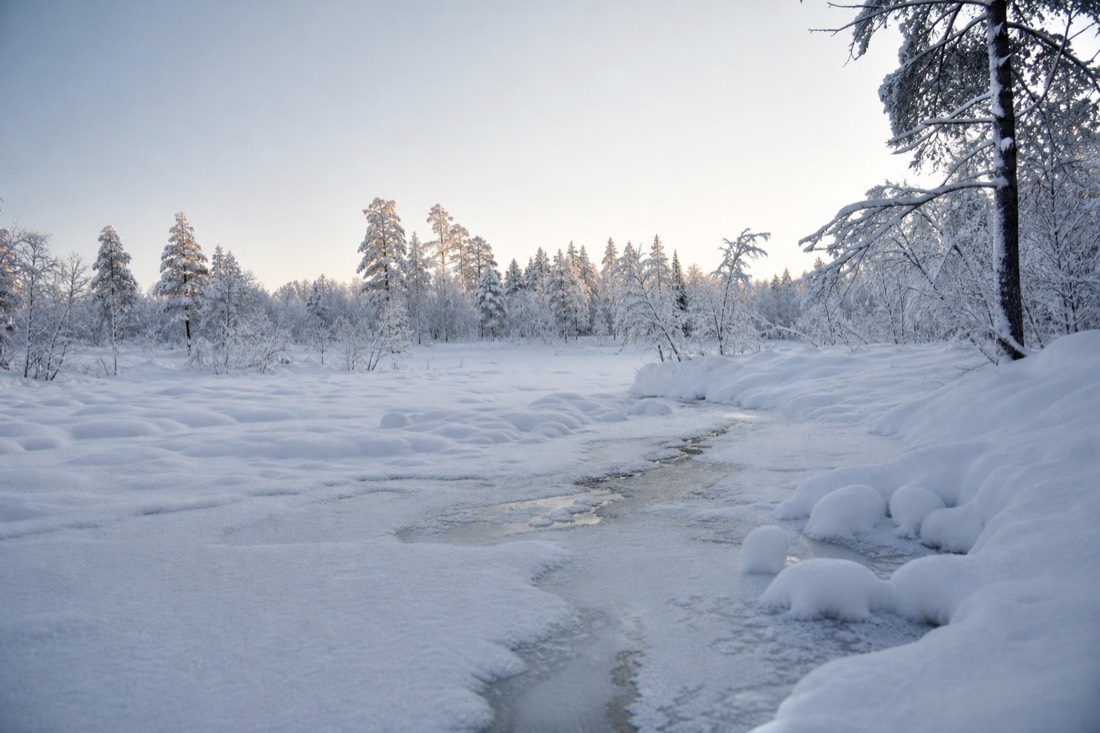
Rovaniemi's January average sits at -12.2°C on the Finnish Meteorological Institute's 1991 to 2020 normals, which the borrowed gear handles comfortably. The kit only really changes at the extremes, and one operator here states that it reschedules or refunds at -30°C or below.
That -12°C figure surprises people in both directions. It is colder than a British winter by a wide margin and it is nowhere near the numbers that circulate online. Finland's record low is -51.5°C, set in 1999, and it has almost nothing to do with what you will experience on a February afternoon in Rovaniemi.
| Temperature you might meet | What it feels like on a tour | What changes in your kit |
|---|---|---|
| 0 to -5°C | Mild for Lapland, damp underfoot | Nothing, you may overheat in the overall |
| -5 to -15°C | The normal working range of the season | Nothing, this is what the gear is built for |
| -15 to -25°C | Properly cold, exposed skin stings | Face covering and a second base layer |
| -25 to -30°C | Rare, and taken seriously by operators | Hand warmers, and shorten time outdoors |
| Below -30°C | Very rare | At least one listing here reschedules or refunds |
The number that actually predicts your comfort is not the air temperature at all. It is wind chill on a moving snowmobile, and it is why the outer layer the operator lends you is more windproof than warm. On a still -20°C night at a campfire you will be fine. At 50 km/h in -8°C you will not be, unless the base layer underneath is doing its job.
Our post on how cold Lapland actually gets works through the monthly figures that could be sourced, and says plainly which ones could not.
What does each activity demand that the others do not?
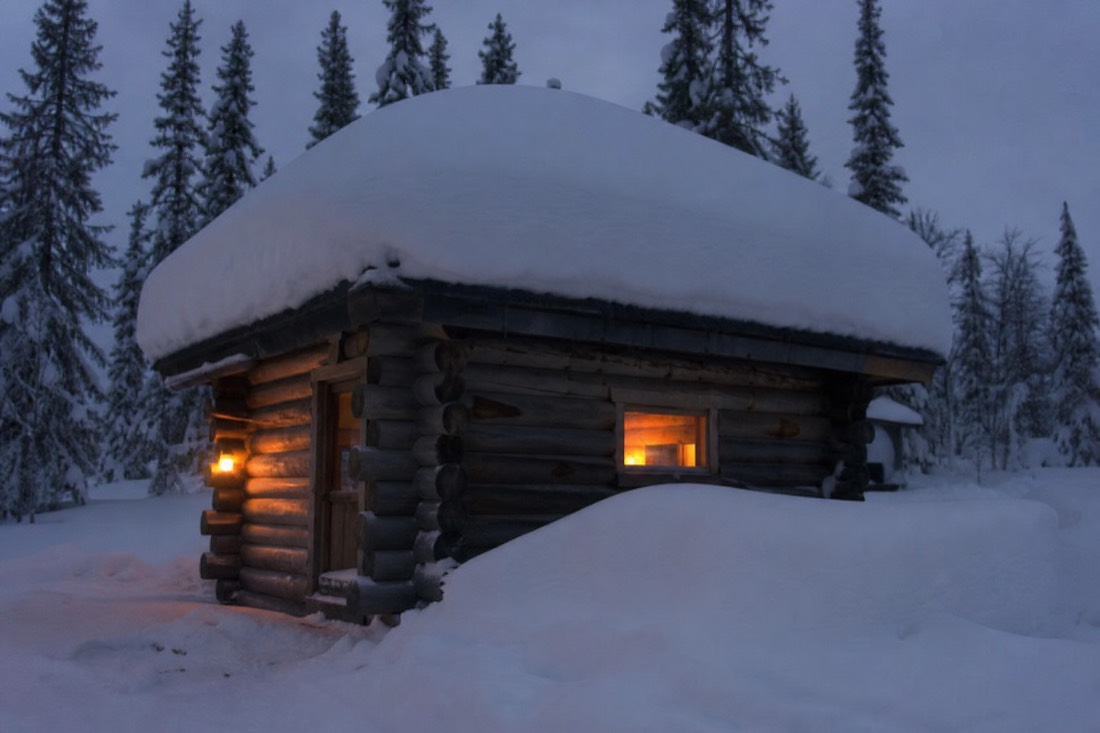
The borrowed gear is broadly the same across activities. What differs is how long you stand still, how much wind you meet, and whether your hands need to work. Those three things decide what you bring underneath.
| Activity | The specific demand | What to bring for it |
|---|---|---|
| Snowmobile safari | Sustained wind chill at speed | The warmest base layer you own, thin glove liners |
| Husky safari, self-driven | Hands on the bar, feet on the runners | Glove liners, and thicker socks than you think |
| Reindeer sleigh or farm visit | Sitting still, moving slowly | An extra mid layer, this is the coldest per minute |
| Aurora tour | Standing outdoors, possibly for hours | Everything, plus hand warmers and a hat that covers the ears |
| Santa Claus Village | In and out of heated buildings | Layers you can shed without a changing room |
| Ice hotel or snow room visit | Constant sub-zero indoors | Warm socks, and nothing you mind sitting on ice in |
The aurora row is the one people underestimate, because it does not feel like an activity. You are outside, at night, in the coldest hours, not moving. Two of the aurora listings here run several hours and one states 5 to 8 hours door to door. Dress for standing still in the dark rather than for the walk to the minibus.
The village row is the opposite problem. You spend the day stepping between heated buildings and the outdoors, and a single enormous coat with nothing underneath leaves you sweating indoors and cold outside within minutes of leaving. Layers you can take off in a queue are worth more there than a warmer jacket.
What Aino tells people to pack, and what to leave at home
Aino Korhonen has planned Lapland trips since 2023 and by her own count has worked with more than 250 international travellers. The packing conversation is nearly always about subtraction rather than addition.
The single most common mistake is buying an expensive winter coat for the trip. Operators lend thermal overalls and boots on every activity listed here, and that outer layer is better than anything most visitors would buy. The coat sits in the hotel room for a week and the money would have bought two more activities.
The second is cotton. Jeans, cotton socks and cotton t-shirts hold moisture, and moisture is what makes people cold in Lapland rather than the air temperature. Thin merino or synthetic base layers cost a fraction of a coat and change the trip.
The third is footwear. Boots are lent for the activities, and people forget that the rest of the day happens on packed ice in Rovaniemi. Something with grip for walking around town is worth more than a second pair of thermal socks.
| Worth packing | Not worth packing | Why |
|---|---|---|
| Thin merino or synthetic base layers | A heavy winter coat | The overall is lent and it is better |
| Wool socks, two pairs per activity day | Cotton socks of any kind | Damp feet are the usual cause of a cold day |
| Glove liners to wear under the lent mittens | Bulky ski gloves | You cannot work a camera or a sled brake in them |
| A hat that covers the ears, and a neck gaiter | A scarf | Scarves come loose at speed |
| Grippy boots for walking around town | Fashion boots | Rovaniemi pavements are packed ice for months |
| Hand warmers for aurora nights | Extra jumpers | Layers beat bulk every time |
None of this is expensive, which is the point. The gear that makes a Lapland trip comfortable costs less than one activity, and the gear that does not help is usually the most expensive thing in the suitcase. Our budget guide covers where the rest of the money actually goes.
Common questions
Can I wear jeans in Lapland?
Around town, yes, briefly. On any activity, no. Denim is cotton, and cotton holds moisture and stops insulating when damp, which is exactly what happens when you sweat slightly or get snow on you. Thermal leggings under soft trousers is the working answer.
Do I need to buy a proper winter coat?
Usually not. Most activity operators lend a full thermal overall and boots that go over your own clothes, so your coat stays in the hotel on activity days. Spend the money on base layers, wool socks and mittens instead.
Mittens or gloves?
Mittens. Fingers together share heat, so mittens are warmer than gloves at the same thickness. If you need dexterity for a camera, wear thin liner gloves under mittens and take the mittens off briefly.
How many pairs of socks should I bring?
More than you think. One thick wool pair per day, not two thin pairs layered, which compresses and works worse. Socks are the item operators never lend and the one that most often decides whether a day is enjoyable.
What about a camera in the cold?
Batteries drain fast in the cold, so keep spares in an inside pocket close to your body. Some aurora tours include a professional photographer and send you the images afterwards, which is worth checking on the listing if photographs are the reason you are booking. Our aurora guide covers what to expect from those.